The Real Wagyu Experience — Why It's World-Famous and How to Enjoy It
Grades, brands, and the magic word to know before ordering wagyu in Japan.
Maybe you've already tasted it — and found yourself thinking, what is that flavor?
The word "Wagyu" is everywhere now. Japanese beef has made quite a name for itself around the world — and from what Kaa-chan has seen, exports from Japan have been growing fast.
"When I get to Japan, I have to try the real thing" — that's a feeling Kaa-chan hears a lot.
But open a restaurant menu and suddenly there are brand names you've never heard of, prices all over the place, and a real question of: what am I even supposed to order?
No need to overcomplicate it. Here's Kaa-chan's way of reading a wagyu menu — and a few things worth knowing before you order.
What Is Wagyu? — It's All About the Breed
First things first: "Wagyu" doesn't simply mean "beef raised in Japan." It's a name given only to cattle that meet strict breed standards. A very specific, very special designation.
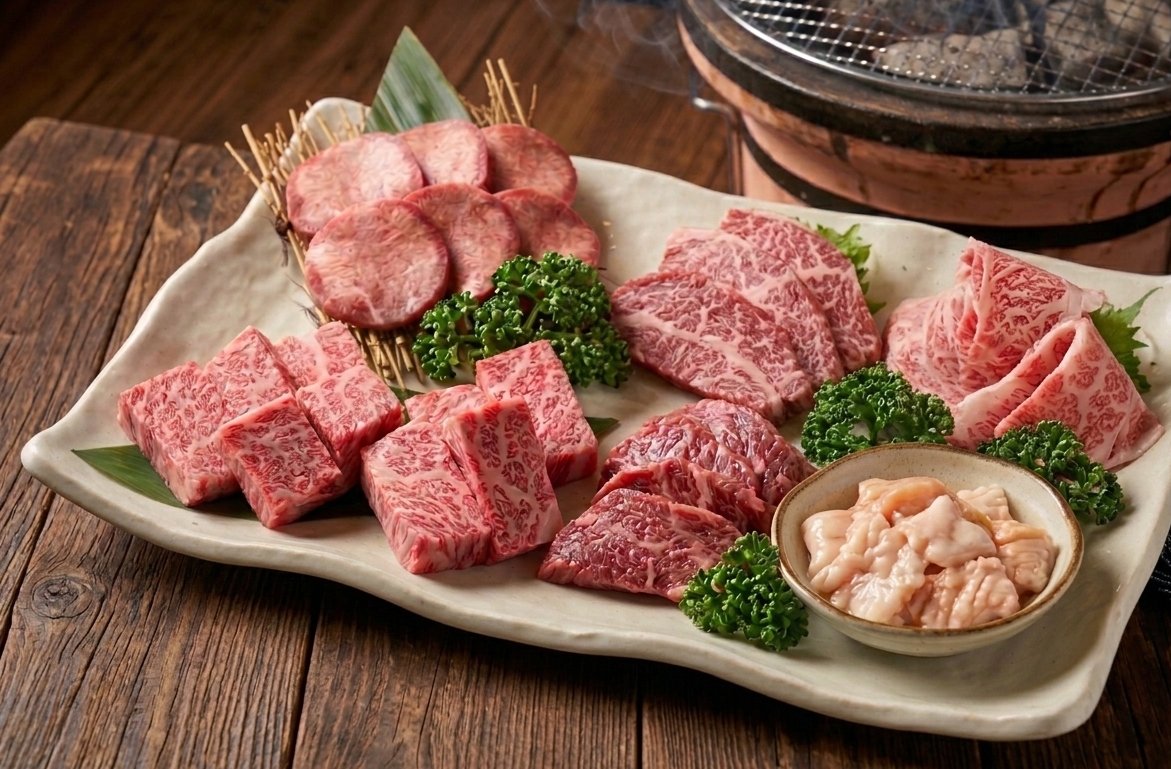
The defining feature of wagyu is that beautiful marbling — sashi. Fine white fat running through the meat like a web. Because that fat is distributed so evenly, the texture when it hits your tongue is genuinely unlike anything else.
Don't Get Fooled — Wagyu vs. Japanese Beef
At Japanese supermarkets and casual restaurants, you'll often see "Kokusan Gyu" — Japanese Beef. This is actually different from wagyu in most cases.
Kokusan gyu refers broadly to any cattle that spent the longest period of their lives in Japan — regardless of breed. That includes dairy cows and crossbreeds with overseas breeds.
"Wagyu," on the other hand, is strictly regulated under Japanese law. If a menu specifically says "Wagyu," you can trust it.
For what it's worth — Kaa-chan's teenage son happily wolfs down any beef with enthusiastic approval, and has never once noticed the difference between wagyu and kokusan gyu. That's how high the baseline quality of Japanese beef is in general. But wagyu is something else. Keep the distinction in mind.
The Truth About Grades: A5 vs. A4
"A5 is the best!" — you hear that a lot when wagyu comes up.
The letter (A through C) refers to yield — how much meat you get from one animal. The number (1 through 5) reflects marbling level and color. So yes, A5 is genuinely top-tier for marbling.
But here's the thing. As Kaa-chan has gotten older, A5's richness has become... a lot. Two or three slices in and it's already "I'm done, thank you, that's enough!" 😄
Which is exactly why Kaa-chan wants to put in a good word for A4.
A4 has the melt-in-your-mouth sweetness that makes wagyu wagyu — but the lean meat still has real presence. Fat and flavor in golden balance. You can eat it all the way through without hitting a wall, savoring every bite. Quite a few people around Kaa-chan deliberately choose A4 for exactly this reason.
No need to memorize the whole grading system. When in doubt at a restaurant, one guideline is enough: Kuroge Wagyu, A4 or above. In Kaa-chan's experience, that's the sweet spot — rich enough to be memorable, balanced enough to finish without regret.
Famous Names — Brands Don't Matter If It's "Kuroge Wagyu"
Japan has many branded wagyu varieties — meigara-gyu — each raised to its own strict standards.
The Top Three Brands
The three most well-known brands in Japan are Matsusaka Beef(松阪牛)in Mie Prefecture, Kobe Beef(神戸牛)in Hyogo Prefecture, and Omi Beef(近江牛)in Shiga Prefecture. Each has a remarkable history and exceptional quality.
Other Amazing Brands Across Japan
There are excellent regional brands throughout the country — Saga Beef(佐賀牛)in Saga Prefecture, Yonezawa Beef(米沢牛)in Yamagata Prefecture, Hida Beef(飛騨牛)in Gifu Prefecture, Miyazaki Beef(宮崎牛)in Miyazaki Prefecture, and more.
The Magic Word: "Kuroge Wagyu"
With so many names, it's easy to feel lost. But don't get too caught up in the brands. After trying quite a few, Kaa-chan has found that the main thing worth looking at is the marbling.
More than the brand, here's the real magic word — the one that means you can't go wrong: Kuroge Wagyu(黒毛和牛), or Japanese Black.
Among wagyu breeds, Kuroge Wagyu is genetically exceptional — the sweetness of the fat and the depth of the meat's flavor are in a class of their own. In Kaa-chan's experience, if a menu says "Kuroge Wagyu," whatever the brand, it's going to be good.
There are also leaner options, like Kumamoto Akaushi(くまもとあか牛)from Kumamoto Prefecture — a breed that leans toward red meat over heavy marbling. Worth seeking out if heavy fat isn't your thing.
Four Ways to Experience Wagyu
Here are four classic Japanese ways to eat wagyu.
Yakiniku(焼肉)
Grill it yourself at the table, over a wire rack. You can order small portions of different cuts — which is why Kaa-chan thinks this is the best way to experience wagyu for the first time.
Sukiyaki(すき焼き)
Beef simmered in a sweet-savory broth called warishita. In Japan, the classic move is to dip the cooked meat into a bowl of raw beaten egg before eating. Some visitors might hesitate — but Japan's egg safety standards are very high. It's safe, it's rich, and it genuinely makes a difference. If you want to go all-in on Japanese food, this one is worth trying.
Shabu-Shabu(しゃぶしゃぶ)
Thin slices of meat quickly swished through hot water or dashi broth. Because the excess fat falls away, it's a lighter way to eat wagyu. Kaa-chan loves swishing crisp lettuce through the broth alongside the meat — highly recommended.
As the meat cooks, foam will form on the surface of the broth. Skimming it off regularly keeps the broth clean and the flavor clear.
Steak(ステーキ)
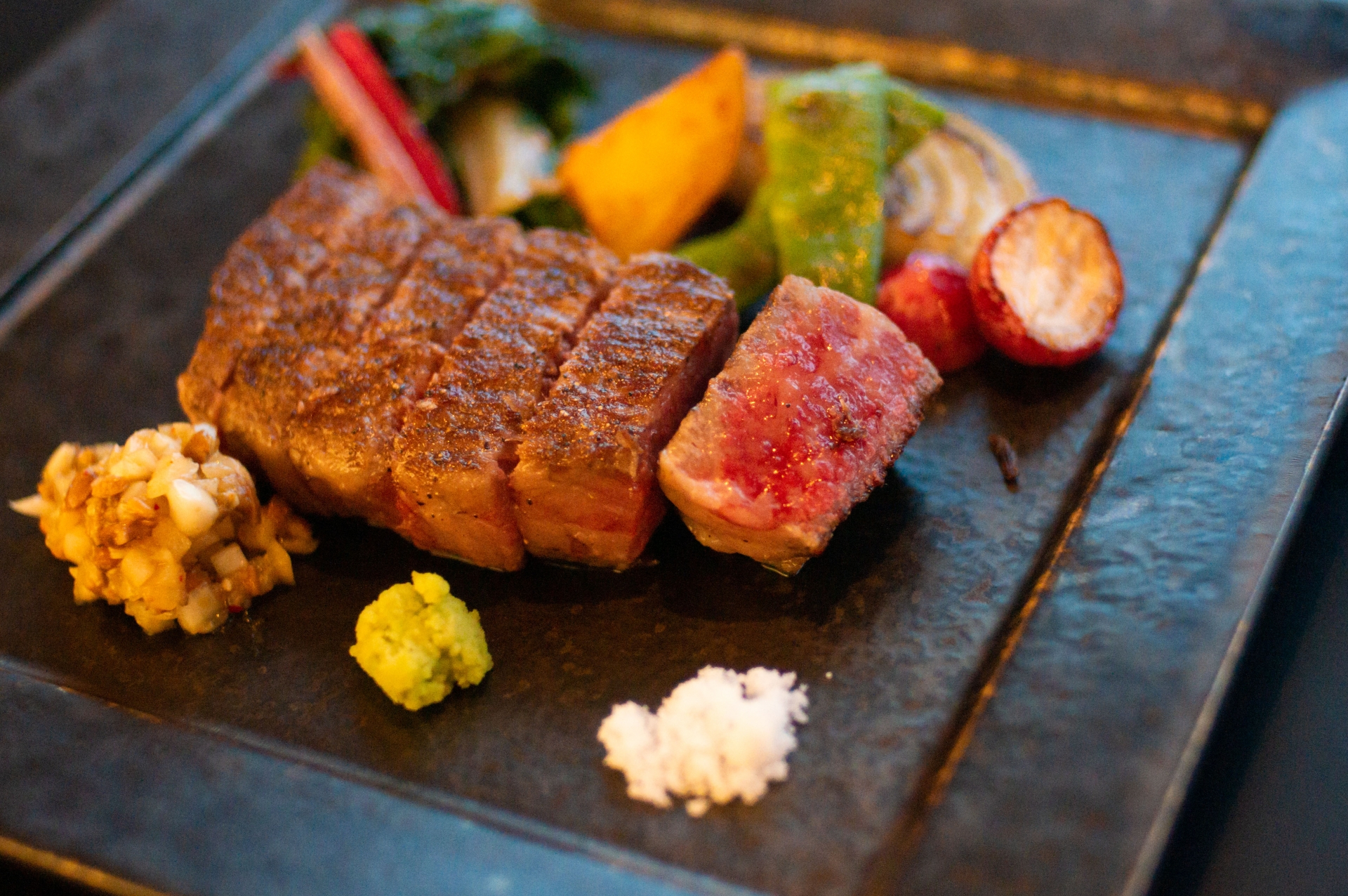
The most direct way to taste the meat itself. More and more restaurants in Japan now serve wagyu as a thick cut, seared the way you'd see it in a Western steakhouse — and for beef lovers, that's a very good thing. Wagyu steak releases an almost absurd amount of juice the moment you bite in. A real luxury.
What It's Going to Cost — How to Plan Your Budget
Honest answer: wagyu is not cheap. It's a luxury — in Japan and around the world. Dinner at a specialty restaurant can easily run 10,000 to 15,000 yen per person or more. But there are smarter ways to enjoy it.
Go at lunch.
Even high-end wagyu spots often offer set meals or donburi bowls at lunch for around 2,000 to 5,000 yen. The quality is the same. The bill is not.
Check izakaya menus.
More izakayas than you'd expect carry wagyu steak, roast beef, and wagyu skewers at very reasonable prices. If you want to enjoy wagyu casually with a drink, an izakaya is a surprisingly good option.
Kaa-chan's Honest Take
When you open a wagyu menu, forget the rules and trust your instincts. Order something that makes you curious. When the plate arrives and you see that marbling up close, it tends to stop people in their tracks.
Go with your appetite, go with your taste — and find your own best dish.