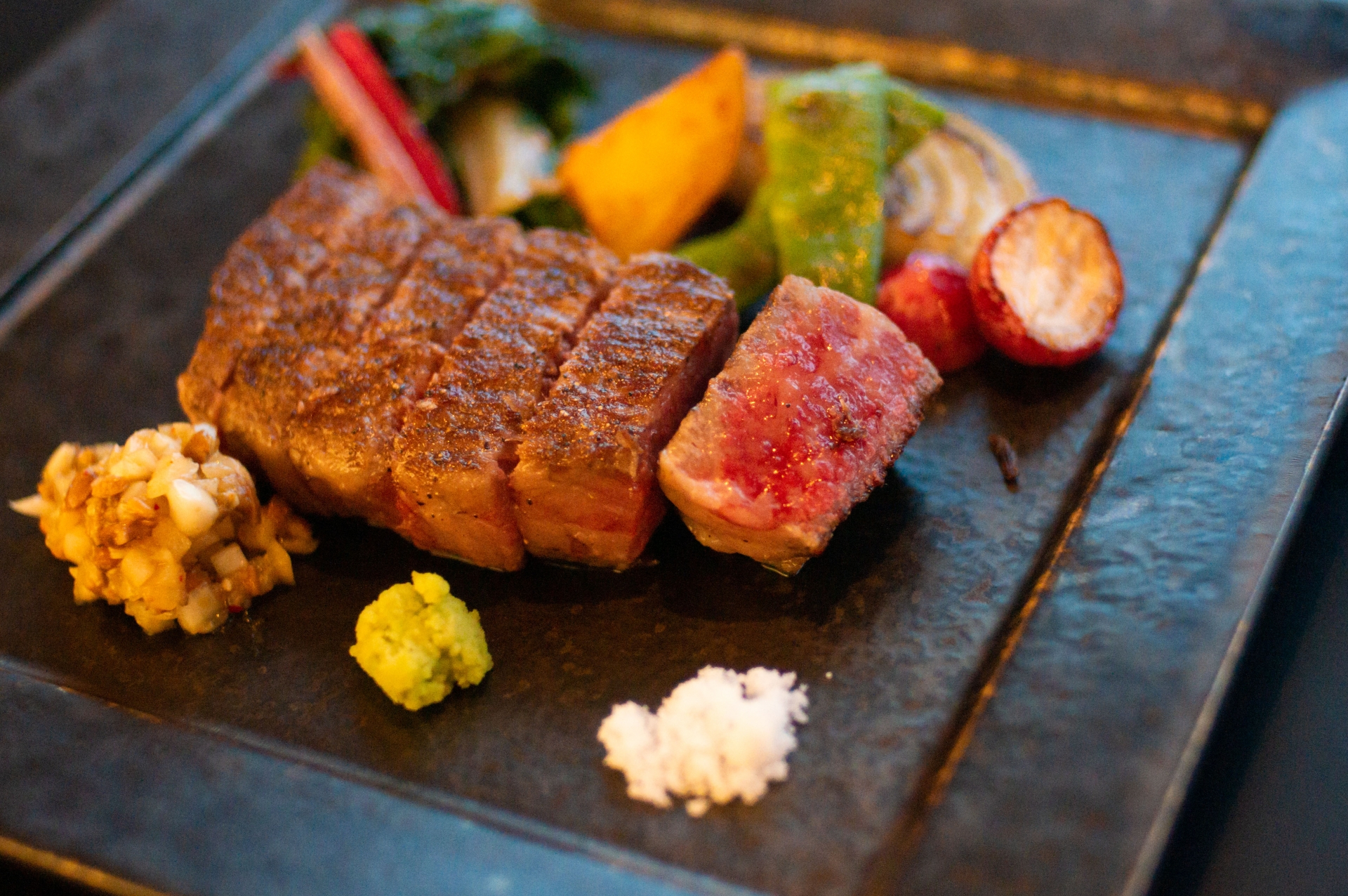
Yakiniku Guide: Beef Cuts, Tare Sauce & What to Order in Japan
Karubi, harami, or tongue? Kaa-chan breaks down the five must-know cuts — and how to order like a local.
Maybe you've already tasted it — and found yourself thinking, what is that flavor?
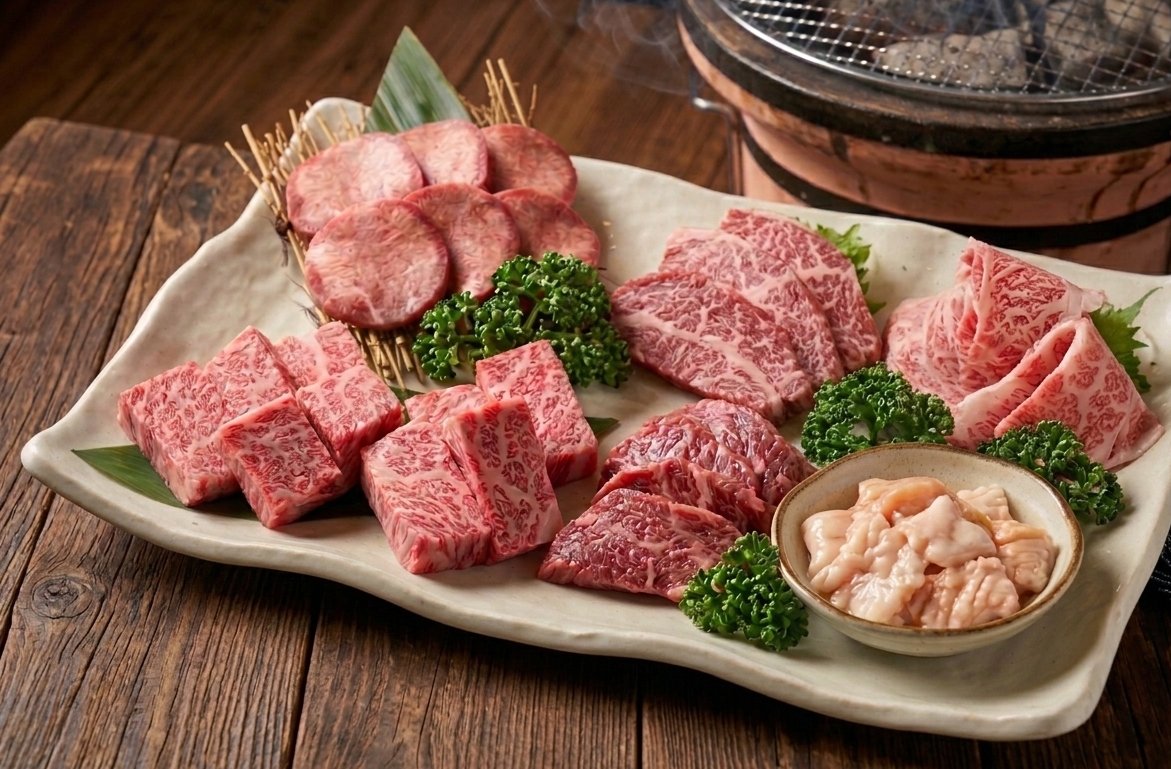
Now that you know what wagyu is, it's time for the practical part — actually ordering it.
Open a yakiniku menu and you'll find a long list of cut names you've probably never heard of. Karubi, Harami, Tan... where do you even start?
No need to memorize all of them. Kaa-chan will walk you through the popular cuts and how to choose.
The Most Popular Cuts — Start Here
From what Kaa-chan has seen, the popular cuts tend to be the same ones, over and over. Know these five and the menu stops being intimidating.
Tan(タン)— Beef Tongue
The classic opening order at any yakiniku restaurant. Tan has a distinctive chewy bite and a clean, light flavor. Served with salt and lemon, it's not heavy — which makes it exactly right for getting things started.
Karubi(カルビ)
Short rib area. Fatty, juicy, and the cut most people picture when they think "yakiniku." Pairs especially well with tare sauce. Young Kaa-chan's favorite move: wrap it in ssam lettuce (a soft leafy green used for wrapping), add a dab of miso. These days, Kaa-chan can't eat nearly as much of it as she used to. 😄
Harami(ハラミ)— Kaa-chan's Pick
The diaphragm muscle. It eats like lean red meat, but it's technically classified as offal. Low in fat, high in umami, and genuinely satisfying to chew through. Light enough that you can keep ordering other cuts without feeling full. Kaa-chan's top pick right now.
Rosu(ロース)
The loin, running from the back through the hip. Less fatty than karubi, with a good balance of lean meat and marbling. If karubi feels like too much fat, rosu is the answer. An all-around crowd-pleaser.
Rump(ランプ)
A lean cut from the upper hip. Low in fat but surprisingly moist, tender, and full of flavor. Apparently very popular with lean-meat lovers. A good option when you want something on the lighter side.
The Secret Weapon: Yakiniku no Tare(焼肉のたれ)
The thing that makes yakiniku even better is yakiniku no tare. Kaa-chan genuinely considers this one of Japan's greatest condiment achievements.
Soy sauce based, blended with garlic, sesame oil, and grated fruit like apple. Sweet, savory, and fragrant all at once — and it brings out the flavor of the meat in a way that's hard to explain until you taste it. The kind of sauce that makes white rice disappear.
Yakiniku no tare isn't just for restaurants. It's a fixture in Japanese home kitchens too. Stir-fry some meat and vegetables, add the sauce, and you've got something that tastes like it came from a proper restaurant. Kaa-chan strongly recommends it as a souvenir from Japan.
👉Yakiniku BBQ Sauce"Mild" on AMAZON
👉Yakiniku BBQ Sauce"Medium Hot" on AMAZON
Recipe: Meat and Vegetable Stir-Fry with Yakiniku no Tare
If you have yakiniku no tare, this is all you need to do. A regular at Kaa-chan's table.
Ingredients (serves 2)
Beef — 200g
Cabbage — ¼ head
Onion — ½
Carrot — ½
Yakiniku no tare — 3 tbsp
Cooking oil — as needed
How to Make It
Cut the vegetables into bite-sized pieces. Slice the carrot thin so it cooks through quickly.
Heat oil in a frying pan and stir-fry the beef. Once the color changes, remove from the pan and set aside.
In the same pan, add the vegetables and stir-fry.
Return the meat to the pan, drizzle the tare over everything, toss to coat, and it's done.
Kaa-chan's note: Works with pork or chicken too — not just beef. Goes perfectly with freshly cooked rice.
The World of Horumon — Don't Be Scared
Most yakiniku menus have a horumon section — offal cuts. The word "offal" might be enough to make some people quietly turn the page. But hold on.
Japanese horumon is handled carefully and very fresh — the strong smell that puts people off in other contexts is mostly absent here. The texture and flavor are something else entirely. In Kaa-chan's experience, quite a few people try it once and don't look back. Start with mino(ミノ)— the first stomach — the satisfying crunch is a good entry point.
And if you get the chance, try motsu nabe — a hot pot built around offal, originally from Fukuoka, now available across Japan.
Motsu Nabe 👉 What Is Motsu Nabe?
Kaa-chan's Tip
Kaa-chan's tip: Don't overthink it.
Can't decide between karubi and rosu? Order both. Comparing is half the fun.
Can't decide between tare and salt? Start with tare. Kaa-chan wants you to discover what yakiniku no tare can do.
Don't know what a cut is? Ask the staff: "Osusume wa dore desu ka?" — Which do you recommend?
One more thing. Beef and pork cook differently.
Pork needs to be cooked through. But with beef, apparently the bacteria stay on the surface — so a pink center is generally considered safe. Once the outside changes color, it's ready. Eat it while there's still some rosy color inside.
Overcook it — grilling or simmering — and it tightens up and loses its flavor. That would be a real shame.
Japanese beef is genuinely delicious.
— Mogu Mogu Kaa-chan A Japanese mom who always orders harami — and one plate of karubi, just for old times' sake.