Japanese Fried Food Beyond Tempura — Karaage, Tonkatsu, and More
From karaage bento to crispy tonkatsu with free cabbage refills — Kaa-chan's guide to Japan's everyday fried food culture.
Maybe you've already tasted it — and found yourself thinking, what is that flavor?
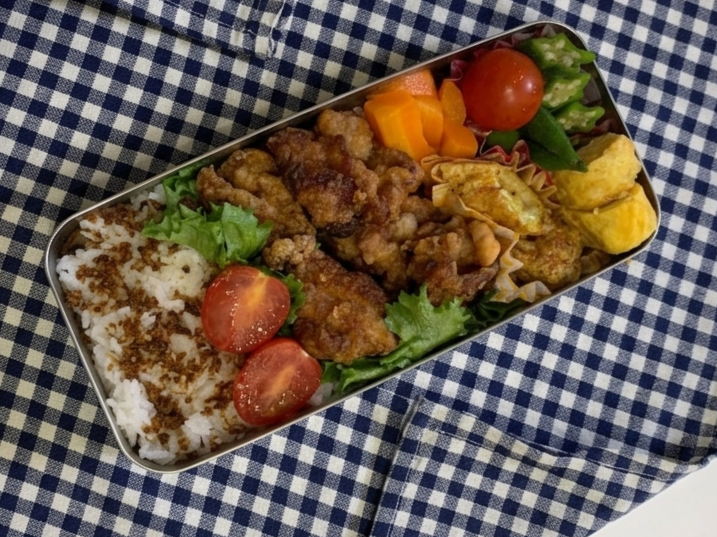
Japan has a whole other world of fried food beyond tempura — and it couldn't be more different.
Where tempura is delicate and refined, these are the dishes that make you lift the bento lid and go "yes." Everyday food. Comfort food. The kind every Japanese person grew up eating.
Two Families of Japanese Fried Food
Japanese fried food splits into two main categories based on the coating. Tempura has its own world — covered in a separate article — so today is everything else.
- Starch / flour coating (粉系) — potato starch or plain flour dusted directly onto the ingredient. The coating stays thin and fries up light and crispy. Karaage, tatsuta age.
- Panko coating (パン粉系) — breadcrumbs that create a thicker, crunchier crust. Tonkatsu, ebi fry, kaki fry, aji fry, korokke, chicken nanban.
Karaage (唐揚げ) — The King of the Bento Box
If there's one fried dish that every Japanese person loves without exception, it's karaage. Kids, adults, grandparents — everyone. And opening a bento box to find karaage inside is one of those small, specific joys that anyone who grew up in Japan will recognize immediately.
Chicken is marinated in soy sauce, ginger, and garlic, coated in potato starch, and fried until the outside is crispy and the inside is juicy. That's karaage. Simple in concept, endlessly variable in practice.
Chicken is the standard, but karaage can be made from almost anything — octopus, shrimp, white fish, lotus root. If a menu says "〇〇 no karaage," it just means that ingredient, fried in the karaage style.
Tatsuta age (竜田揚げ) is in the same family — marinated in soy sauce and mirin, coated in potato starch, fried to a reddish-brown that resembles autumn maple leaves. It works especially well with fish. Kaa-chan often makes it with mackerel or yellowtail at home.
Kaa-chan's mom made karaage with soy sauce, garlic, and ginger — deeply seasoned, with juice that rushed out the moment you bit in. The best in the world. Kaa-chan has asked for the recipe many times and tried many times to replicate it. The flavor shifts every time. That perfect version remains just out of reach. Some things about home cooking run deeper than a recipe. 😄
Tonkatsu (とんかつ) — An Excuse to Eat Rice and Cabbage
Pork coated in flour, egg, and panko, then fried until golden and crispy. Two cuts to know: hire (ヒレ / tenderloin) is lean and light; rosu (ロース / loin) has more fat and more richness. Both are good — it comes down to mood.
One thing Kaa-chan really wants visitors to know: the dark, slightly thick sauce sitting on the table at a tonkatsu restaurant is tonkatsu sauce (とんかつソース). Please use it. It's made from concentrated fruit and vegetable flavor with spices — when it soaks into the crispy panko and you eat that with white rice, that combination is what Japanese people are actually there for.
Most tonkatsu specialty restaurants and chains offer free refills of rice, shredded cabbage, and miso soup. The cabbage is eaten different ways — some people add dressing, some pour tonkatsu sauce over it and eat it alongside the pork. Kaa-chan is firmly in the sauce camp, and needs a large ratio of cabbage to each bite of tonkatsu. Three cabbage refills at a single sitting has happened. 😄
Korokke (コロッケ) — Homemade Love in Crispy Form
Mashed potato mixed with meat, shaped, coated in panko, and fried. Korokke sounds simple but involves steaming potatoes, frying the filling, mixing, shaping, breading, and then frying — a lot of steps. Which is why many people just buy them ready-made from supermarkets and deli counters.
Kaa-chan grew up on homemade korokke from mom — generously meaty, two pieces and you were full. Lately, Kaa-chan's mom has started replacing some of the potato with drained tofu — lighter, still satisfying, and genuinely delicious in its own way. An evolution worth knowing about. 😄
Seafood Fry & Chicken Nanban — Discoveries That Come With Age
Ebi fry (エビフライ) — a large prawn in panko, fried until the coating is crispy and the shrimp inside stays springy. A childhood favorite that never gets old.
Kaki fry (カキフライ) — oyster in panko. As a child, Kaa-chan watched dad eat these while avoiding them entirely. As an adult, the rich, briny depth hit differently. Full conversion. 😄
Aji fry (アジフライ) — horse mackerel in panko. After trying a mail-order version featured on TV and frying it at home, Kaa-chan became so obsessed that the next step was driving to a specialty aji fry restaurant in Chiba Prefecture. Thick, meaty, and full of flavor — this might be Kaa-chan's current favorite fried food of all.
Chicken nanban (チキン南蛮) — fried chicken dipped in sweet vinegar sauce, then buried under homemade tartar sauce. Originally from Miyazaki Prefecture (宮崎県) in Kyushu. The combination of tangy sauce and creamy, egg-heavy tartar is something that needs to be experienced.
A Note on Tartar Sauce
Japanese tartar sauce has evolved into something distinct from the Western version — generous with chopped boiled egg, and made to be piled on rather than drizzled.
On aji fry or chicken nanban days, Kaa-chan makes a full bowl of it: IKEA pickles, finely chopped onion with the sharpness soaked out, crumbled boiled egg, and mayonnaise. Mixed together in quantity. Spooned onto freshly fried food in generous amounts. This is a serious household ritual. 😄
Kaa-chan's Tip: The Sauce Culture
Japanese fried food and sauce are inseparable. The main ones to know:
- Tonkatsu sauce (とんかつソース) — thick, sweet-savory, fruit and vegetable based. The go-to for tonkatsu and korokke.
- Chunoh sauce (中濃ソース) — slightly thinner, a bit more acidic. Versatile.
- Worcestershire sauce (ウスターソース) — thin and sharp. Used in some regions and recipes.
- Tartar sauce (タルタルソース) — essential for seafood fry and chicken nanban.
Many specialty restaurants make their own house versions of these sauces. Try whatever's on the table.
And Japan's fried food world keeps going: harumaki (春巻き / spring rolls), ebi mayo (エビマヨ / shrimp in creamy sauce) — Chinese dishes that arrived in Japan and evolved into something distinctly local. Worth ordering at izakayas and Chinese restaurants when you spot them.
There's no bad choice in Japan's fried food lineup. Find as many as you can.
— Mogu Mogu Kaa-chan
A Japanese mom who makes a giant bowl of homemade tartar sauce for her favorite aji fry — and eats three refills of cabbage at tonkatsu restaurants.