Japanese Fruit Isn't as Expensive as You Think — A Season-by-Season Guide
From gift-worthy melons to everyday supermarket finds — Kaa-chan's guide to Japan's seasonal fruit and how locals actually enjoy it.
Maybe you've already tasted it — and found yourself thinking, what is that flavor?
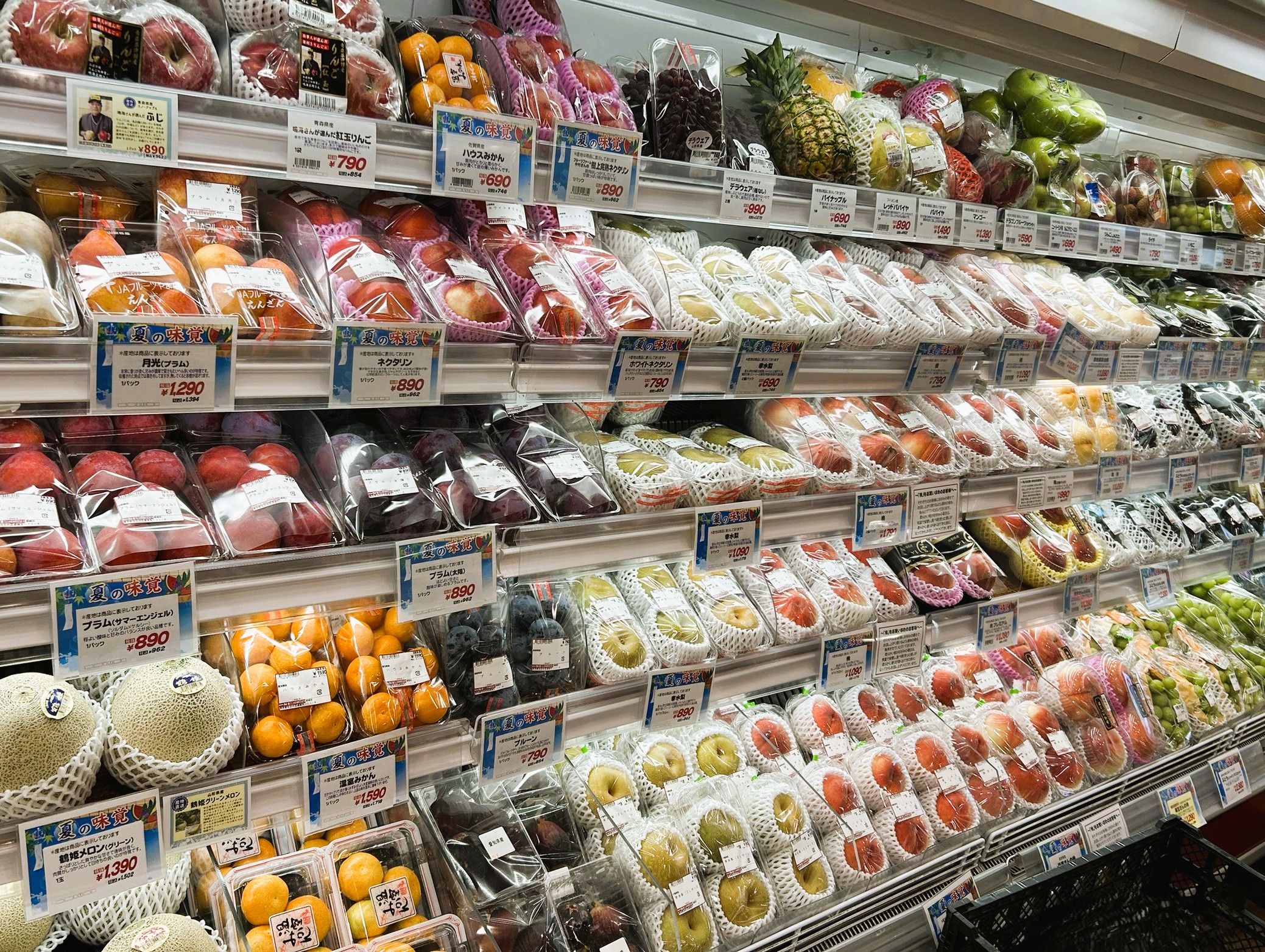
"Japanese fruit is so expensive, right?"
Kaa-chan hears this a lot. And yes — walk into a department store basement or a high-end fruit shop, and you'll find strawberries priced per berry, glossy premium cherries, whole melons over 10,000 yen, and perfectly ripened Miyazaki mangoes displayed like jewelry. That part is real.
But that's the gift world. Those are for opening ceremonies, important thank-yous, and special occasions. The fruit Japanese people actually eat every day is something else entirely.
In any city or regional town, the place to go is a neighborhood supermarket or yaoya (八百屋) — a greengrocer. Cut fruit is almost always available: watermelon, melon, apple, persimmon, all pre-sliced and under 1,000 yen. No knife needed, ready to eat in the hotel room. Mikan comes in bags at prices that make sense. Japanese fruit belongs on your travel eating list — right alongside ramen and sushi. Find a supermarket and try some.
Why Japanese Fruit Tastes the Way It Does
Visitors who try Japanese fruit for the first time often stop mid-bite. "Wait — what is this?" The sweetness hits differently.
It didn't start this way. Japanese researchers and farmers spent decades — sometimes 20, 30 years — selectively crossing the sweetest specimens, then crossing those results again, then again. This isn't GMO. It's painstaking, generation-by-generation cultivation driven by one goal: make it taste better.
When Kaa-chan was young, strawberries were sharply tart. The standard move was to crush them with milk and sugar, or drizzle condensed milk over the top. Putting salt on watermelon — still a thing in Japan — apparently started as a way to make older, less sweet varieties taste better by contrast. Decades of breeding later, the fruit has caught up. You don't need the tricks anymore.
The dedication behind that is something Kaa-chan finds genuinely moving.
Japan's Seasonal Fruit Calendar
Japan's four seasons mean the fruit lineup changes completely throughout the year. Match your travel timing to what's in season.
Kaa-chan's note: greenhouse cultivation means some fruits appear outside their natural window. Think of this as a guide to peak season — when they're at their absolute best.
- Winter (Dec–Feb): Mikan
- Winter–Spring (Jan–Apr): Strawberry (ichigo)
- Spring (Mar–Apr): Amanatsu, Dekopon
- Early Summer (May–Jun): Biwa / loquat (Nagasaki)
- Early Summer (Jun): Cherry (Yamagata / Sato Nishiki)
- Summer (Jun–Aug): Watermelon, white peach, melon
- Late Summer–Autumn (Aug–Oct): Shine Muscat, nashi pear
- Autumn (Oct–Nov): Persimmon, apple, chestnut
Kaa-chan's Must-Try List
Mikan (みかん) — Winter's Everyday Joy
In Japan, winter means sitting under a kotatsu (こたつ) — a low table with a heating element underneath and a blanket draped over the sides — peeling mikan. It's as much a ritual as it is a snack. Bags of mikan are inexpensive, sweet, and easy to peel by hand. Perfect for eating on the move.
Ichigo / Strawberry (いちご) — Every Variety Tastes Different
Amaou, Tochiotome, Benihoppe — Japanese strawberry varieties each have their own flavor identity. Some are intensely sweet and rich. Some balance sweetness with just enough acidity. Some are floral and light. When multiple varieties are on display, try more than one. The differences are real.
Suika / Watermelon (スイカ) — Follows Its Own Frontier
Watermelon is Japan's summer fruit. From what Kaa-chan has looked up, there's actually a "watermelon frontier" that moves northward like the cherry blossom front — starting in Kumamoto in March, reaching Chiba in May, and arriving in Yamagata at peak summer in July and August. The origin on the supermarket label changes as the season progresses.
In summer, buy cut watermelon at a supermarket. That's the move.
Momo / White Peach (桃・白桃) — Pure Summer Luxury
A ripe Japanese white peach in the room fills the air with sweetness before you've even cut it. Peel it and juice runs over your hands. Bite in and the flesh dissolves — no chewing required, just flavor. Yamanashi, Fukushima, and Okayama are the names to look for.
One practical note: the fine fuzz on the skin can irritate, so rinse briefly under water before eating. Handle gently — these bruise easily and the flavor suffers for it.
Melon (メロン) — Gift Prices Aren't the Only Option
The 10,000-yen whole melon exists, but so does reasonably priced cut melon at the supermarket. For visitors who want to taste what Japanese melon is actually about without the ceremony, cut melon is the answer.
Shine Muscat (シャインマスカット) — 30 Years in the Making
The skin snaps, then comes a wave of concentrated sweetness and elegant muscat fragrance that fills everything. No seeds. Edible skin. The grape Kaa-chan would call a dream.
Japanese researchers spent over 30 years developing this variety. Thirty years. That's a career. That's a life's work dedicated to making a grape taste like this. Kaa-chan has enormous respect for that kind of commitment — and the fruit shows it. Available from around early August. A little pricey, but the price has come down significantly in recent years. If you see it, buy it.
Fuji Apple (ふじりんご) — Japan's Gift to the World
Fuji apples are now grown and loved worldwide. Development began in 1939 and took over 20 years to complete. When it was first introduced, farmers rejected it because the color wasn't right. The breeders in Aomori kept going anyway. The result is one of the most widely grown apple varieties on the planet. Kaa-chan finds that story quietly heroic.
Autumn Extras — Nashi, Kaki, Chestnut
Nashi / Japanese pear (梨) is crisp, juicy, and refreshing — great for hydration on the go. The variety changes as the season progresses: Kosui, Hosui, and others each have a slightly different character.
Kaki / Persimmon (柿) is the taste of Japanese autumn. Deep orange, sweet, and only available for a short window. Worth seeking out.
Chestnut (栗) brings that warm, starchy sweetness — roasted and eaten whole, or worked into everything from wagashi sweets to chestnut rice (kuri gohan) and candied chestnuts (kanroni). In autumn Japan, chestnuts appear across the entire food landscape, sweet and savory alike. Keep an eye out for them everywhere.
More to Come — Season by Season
Found something that sounds good? Kaa-chan will be posting real-time seasonal fruit updates on X with photos — follow along for what's actually in the shops right now.
Stop at a local supermarket during your trip. Buy whatever's in season. That's one of the best things you can do in Japan.
— Mogu Mogu Kaa-chan
A Japanese mom who still puts salt on her watermelon — and always will.
RELATED READS