Japanese Miso Guide — What Is Miso and How to Use It
Miso goes far beyond soup. Here's what it is, where to taste it, and how to cook with it at home.
Some links in this article are affiliate links. If you purchase through them, Kaa-chan may earn a small commission — at no extra cost to you.
Maybe you've already tasted it — and found yourself thinking, what is that flavor?
Have you ever been served a small bowl of brownish soup at a Japanese restaurant?
That's miso soup. But miso is far more than a soup ingredient.
Once you understand miso, the flavors of the Japanese home kitchen start to feel a lot closer.
What Is Miso?
Miso is a fermented seasoning made from soybeans, salt, and koji.
Koji is rice or soybeans cultivated with a specific mold. That mold drives fermentation, slowly transforming soybeans into something dense with umami. Think cheese, think wine — miso belongs to that same family of flavor, born through fermentation.
The finished miso has layers: saltiness, umami, sweetness, depth. It's not just salty. Like dashi and soy sauce, it's rich in umami.
From what Kaa-chan has seen, there's probably not a Japanese home kitchen without miso in it. That's how deeply it runs through Japanese cooking.
The Main Types of Miso
There are several types of miso. They vary in color and flavor — here's a quick overview.
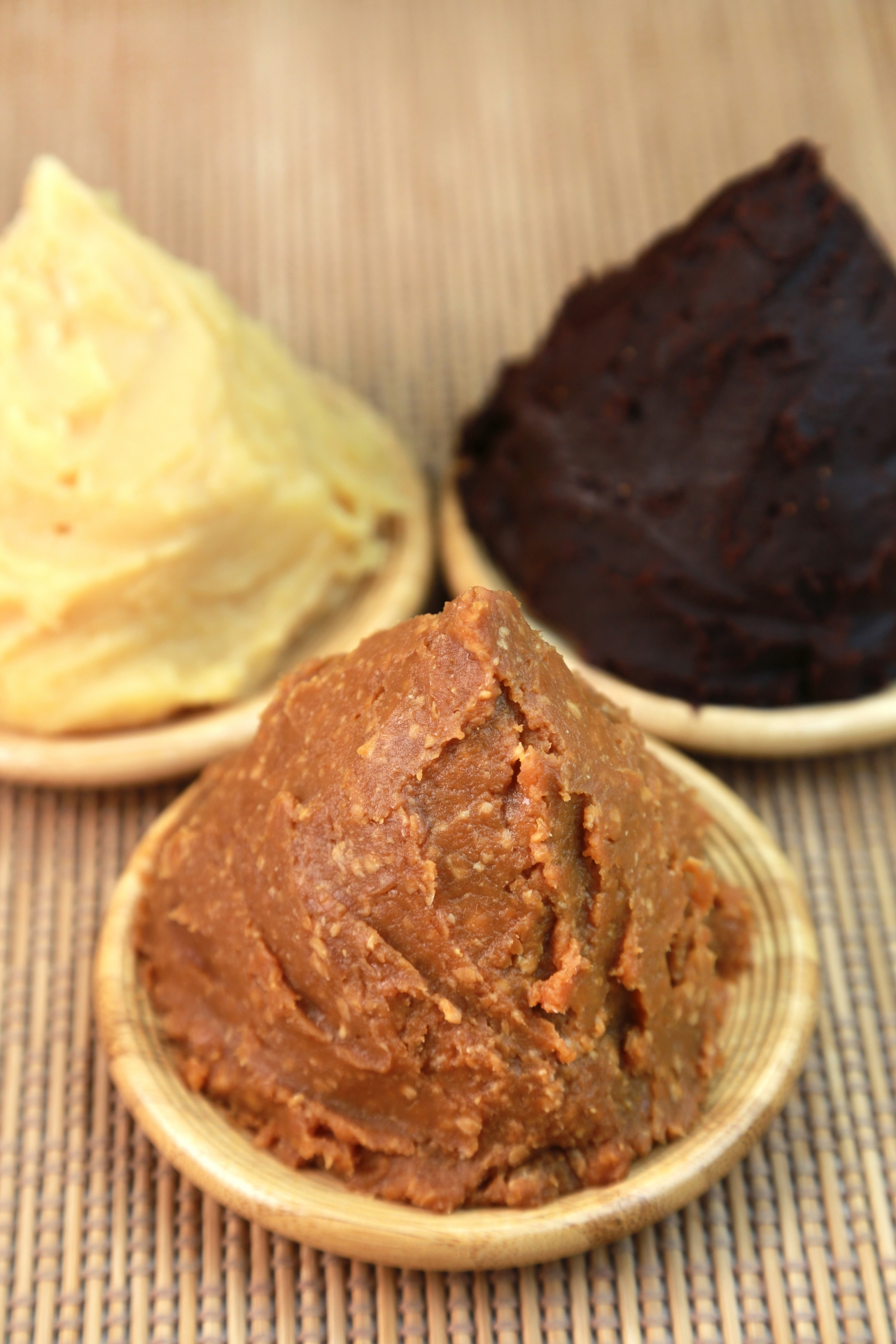
Shiro Miso (白味噌)
Light in color, higher in sweetness, lower in salt. The shorter fermentation time gives it a mild, gentle flavor. Commonly used in Kyoto-style cooking.
Aka Miso (赤味噌)
Deep in color, bolder in saltiness, with a rich depth. Fermented for a longer period. Widely used in the Tokai region centered around Nagoya — this is the miso in miso katsu and miso nikomi udon.
Awase Miso (合わせ味噌)
A blend of shiro miso and aka miso, or other combinations. Well-balanced and versatile. Much of what's sold simply as "miso" in Japanese supermarkets is this type.
One Country, Many Misos: Regional Differences
Miso culture varies quite a bit across Japan. Tohoku and Shinshu (Nagano) tend toward bold, red-style miso. Kansai leans sweeter with white-style miso. Tokai goes for rich, dark red miso. Kyushu often uses a sweeter barley miso.
If your trip takes you to different regions, try the miso soup in each place — the regional character shows up directly in the taste.
Where You'll Taste Miso in Japan
Miso isn't just for soup. It shows up across Japanese food in all kinds of ways.
Miso Soup — At teishoku restaurants, izakayas, ryokan breakfasts — it's almost everywhere. That warm, comforting flavor is miso at its most essential.
Miso Ramen — Known as a style that originated in Sapporo, Hokkaido. The miso-based broth is rich and warming.
Miso Katsu — A Nagoya specialty — fried cutlet topped with a sweet and savory red miso sauce. In Kaa-chan's opinion, it might be the dish that best shows just how versatile miso can be.
Yaki Onigiri — Rice balls brushed with miso and grilled. Smoky, savory-sweet. A common find at izakayas.
Miso at Home — How to Start
Miso is one of the easier Japanese seasonings to find — at Japanese grocery stores or online.
Kaa-chan's pick: awase miso. It's well-balanced enough to work in almost any dish — and if anyone asks Kaa-chan what to buy first, this is the answer without hesitation.
👉Awase Miso Soyabean Paste on Amazon
Recipe 1: Miso Soup with Potato and Onion (じゃがいもと玉ねぎの味噌汁)
Time: About 15 minutes
Seasoning: Miso only
Ingredients (serves 2)
- 1 potato
- ½ onion
- 1 dashi packet 👉 Kaa-chan's favorite: Easy Japanese Recipes with Dashi and Mentsuyu
- 400ml water
- 1–1.5 tbsp miso
Instructions
Slice the potato into thin, bite-sized pieces. Slice the onion to roughly the same thickness. Keeping them even helps everything cook at the same rate — and gives a nicer texture.
Bring water to a boil in a pot and simmer the dashi packet according to the packet instructions. Remove the packet, add the potato and onion, and cook until tender.
Reduce the heat, then dissolve the miso in. Done.
One thing to watch: don't let it boil after adding the miso. The aroma and umami will cook right off.
Kaa-chan's Note
Onion adds a natural sweetness to the broth. Adding 2–3 or more ingredients gives the soup more depth. Green onion, spinach, cabbage, and wakame all work beautifully — mix and match by mood or season.
Recipe 2: Miso Marinade (味噌漬け)
Time: About 10 minutes (plus marinating time)
Seasoning: Miso only
Ingredients (serves 2)
- 2 pieces of your choice — chicken, pork, or white fish all work
- 2 tbsp miso
- 1 tbsp honey
- 1 tbsp olive oil
Instructions
Mix the miso, honey, and olive oil to make the marinade. Coat the ingredients all over and refrigerate for at least 30 minutes. Cook in a frying pan or oven until done. It can burn easily — medium heat, keep an eye on it.
Kaa-chan's Note
The longer it marinates, the deeper the flavor. Prep it the night before and tomorrow's dinner is halfway done. Keeps in the fridge for 2 days.
Mother's Homemade Miso — A Family Tradition
Here's something Kaa-chan doesn't mention often: the miso in this kitchen is homemade.
The recipe came from Kaa-chan's mother — Baaba. Every year, at the end of winter, Kaa-chan, Baaba, and Kaa-chan's son make it together. Three generations around the same pot, once a year.
Just three ingredients. And honestly, the process is simpler than you'd expect. Once it's packed away, you leave it alone. Time and fermentation take care of the rest.
Kaa-chan will write a full article on homemade miso someday. When the mood strikes!
— Mogu Mogu Kaa-chan
A Japanese mom who makes miso from scratch every year — with her mom and her son, three generations around the same pot.