Types of Japanese Sake — A Beginner's Guide to Drinking Sake in Japan
Sake feels complicated — until someone who just started drinking it explains it simply. Kaa-chan's honest beginner's guide.
Maybe you've already tasted it — and found yourself thinking, what is that flavor?
Sake always seemed complicated, to be honest.
At izakayas, Kaa-chan always stuck to beer or lemon sour. Sake felt like something for serious grown-ups — and for most of Kaa-chan's life, it stayed that way, right up until past 50.
But recently, something shifted. Depending on the food, there are moments now where Kaa-chan thinks, "I want sake with this." Still very much a beginner — but maybe that's exactly why Kaa-chan can write something useful for people standing at the same entrance.
The world of sake is genuinely vast. But it doesn't have to feel complicated. Let's just sort out the basics — together.
First, What Is Sake?
Sake is a Japanese drink made from rice, water, and koji.
Just three ingredients — and yet the character of the finished sake varies completely from one brewery to the next. One big reason, from what Kaa-chan looked up: water. The regions with the most breweries tend to share two things — good rice-growing land and good natural water. Niigata, Hyogo, Kyoto, Tohoku — all of them have excellent water.
From what Kaa-chan found, there are over 1,500 breweries across Japan — each producing multiple labels. Think of them like wine chateaux or craft breweries, and the scale starts to make sense. "I have no idea where to begin" is a completely reasonable feeling. Kaa-chan is right there too.
How to Read the Label
Sake labels carry two key pieces of information.
The first is ingredients. Sake made from only rice, water, and koji is called junmai-style. Sake with a small amount of distilled alcohol added — to bring out a cleaner aroma — is the jozo (brewed alcohol) style.
Junmai-style sake expresses the umami of the rice directly. Substantial, with a lingering rice flavor after each sip. The jozo style tends toward a more lifted aroma and a cleaner finish. Both can taste "clean" — but junmai clean sits on top of umami, while jozo clean is closer to lightness.
The second piece of information is how much the rice has been milled. The more it's milled, the more fragrant and refined the sake tends to be. "Ginjo" and "daiginjo" refer to sake made from heavily milled rice.
Junmai(純米酒)
Made from rice, water, and koji only — no additives. If the label says "junmai," that's the guarantee. Rich umami, and apparently it holds up well when warmed.
Honjozo(本醸造)
Junmai with a small addition of distilled alcohol. Generally clean and approachable. Usually reasonably priced.
Ginjo(吟醸)
Made from rice milled to 60% or less of its original size. Tends toward fruity aromas and a clean, smooth finish.
Daiginjo(大吟醸)
Milled to 50% or less — the premium tier. Fragrant and refined. Often given as a gift.
Honestly, at Kaa-chan's level, the differences are hard to detect. Drink enough variety and they'll probably start to reveal themselves!
Sake and Food — They're Better Together
In Kaa-chan's opinion, sake is made to be drunk with food.
The way wine has food pairing, sake has its own version. Dry sake with sashimi, umami-rich junmai with simmered dishes, warmed sake with hot pot — those kinds of pairings come up a lot.
But there's no reason not to just go with what sounds good. There were nights Kaa-chan just wanted something sweet while eating sushi.
What Kaa-chan can say for certain: sake and Japanese food genuinely belong together. The umami of dashi and the umami of sake layer onto each other and lift both. If you're eating Japanese food, sake is worth trying alongside it.
How to Drink It — Cold, Warm, or Room Temperature
One of sake's interesting quirks: the same sake can taste and smell completely different depending on the temperature.
Cold(冷酒)
Served chilled. The standard for fruity ginjo and daiginjo. Clean and easy to drink.
Room Temperature(常温)
Neither chilled nor warmed — just as it is. Apparently the preferred method for serious sake drinkers, since it shows the sake's natural character most clearly.
Warm(燗酒)
Warmed sake. Said to suit junmai and honjozo particularly well. Warming it brings out the umami and heats the body from inside.
Warmed sake comes in different temperature levels, apparently. Around 40°C is called nurukan — soft and mellow on the palate. Around 50°C is atsukan — the aroma opens up and the finish gets sharper. Ordering warmed sake at an izakaya on a cold night feels kind of cool, honestly. Kaa-chan hasn't tried it yet.
On the Order of Drinking
If you want to try multiple types, the recommended approach is apparently to start with something light and clean, then gradually move toward richer umami and stronger aromas. Starting with something bold can make it harder to appreciate the subtlety of lighter sake afterward. Same logic as wine.
The Vessels(酒器について)
The vessels for sake come in all kinds — ochoko (small cups), tokkuri (ceramic flask), masu (square wooden box), and more.
Some izakayas let you choose between a glass or a tokkuri. A glass is typically around 90ml; a tokkuri holds one go (180ml). If you want to try different types one after another, go with a glass. If you want to settle into one label — or share with the table — a tokkuri is the better choice.
Some places let you pick your own ochoko from a colorful selection, which is a small joy in itself. One thing worth knowing: an ochoko is not a shot glass. It's not meant to be downed in one go — it's for sipping slowly and savoring.
Mokkiri — The Glass in a Masu(もっきり)
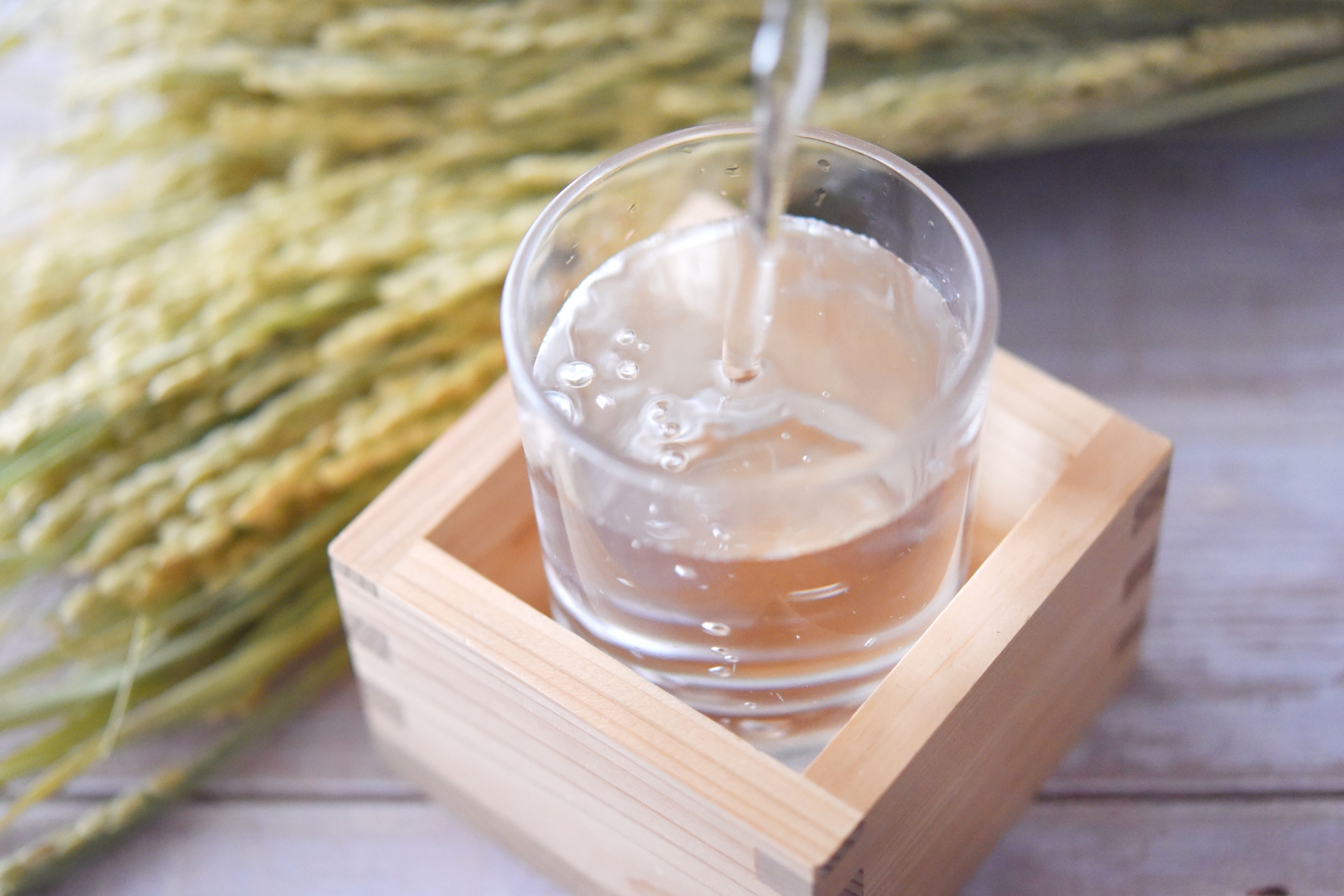
A glass placed inside a wooden masu, filled right to the brim — this is called mokkiri. Apparently the name comes from "morikiiri," a practice from the Edo period when sake was sold directly from barrels into masu at liquor shops. The overflow effect from those days lives on in this presentation.
There's no single right way to drink it, but here's the graceful approach. First, tilt the glass slightly and let the overflow settle into the masu. Drink from the glass. When the glass is empty, transfer what's left in the masu back into the glass and finish that.
Kaa-chan has watched people do this and always thought it looked cool.
Next time, Kaa-chan is trying it!
Sweet or Dry? — How to Order Without Overthinking It
Some sake labels carry a number called nihonshu-do — the sake meter value. The higher the positive number, the drier. The more it goes negative, the sweeter — apparently. But honestly, standing in front of a menu trying to decode numbers is a high bar for a beginner.
Kaa-chan's recommendation: just ask the staff. "Do you have something sweet you'd recommend?" or "I'd like something without a strong aroma" — that's enough to narrow it down significantly. A place that knows its sake will sometimes even match it to what you're eating.
Start sweet, and trust that someday the dry stuff might start to call. That's Kaa-chan's approach.
Sake by Region — Almost Every Prefecture Makes It
Sake is made in almost every part of Japan — practically every prefecture has at least one brewery.
There are exceptions. Okinawa has its own tradition of awamori — a distilled spirit made from sugarcane — and Kagoshima and Miyazaki are deep shochu country. Both regions apparently have few sake breweries.
That's all the more reason to drink whatever the local specialty is wherever you go!
Niigata(新潟)
Said to be the birthplace of the phrase "tanrei karakuchi" — light and dry. Clean, approachable sake. Kubota, Hakkaisan, and Koshi no Kanbai are the well-known names — brands that have reached an international audience.
Nada and Fushimi — Hyogo and Kyoto(灘・伏見)
The two great centers of the sake industry. Nada (around Kobe) is known for bold, dry sake — sometimes called "otoko-zake," or men's sake. Fushimi (Kyoto) is known for soft, gentle sake — "onna-zake," or women's sake, apparently. Kikumasamune and Kenbishi from Nada; Gekkeikan and Kizakura from Fushimi.
Tohoku(東北)
From what Kaa-chan has heard, this is the region generating the most excitement among sake fans right now. Aramasa (Akita), Hiroki (Fukushima), Dewazakura (Yamagata) — names Kaa-chan knows, but hasn't tried yet. Someday.
Yamaguchi(山口)
Home to Dassai — one of the most recognized Japanese sake brands internationally. Multiple tiers based on milling ratio; the lower the number, the more the rice has been milled, and the higher the grade. Apparently a brewery opened in Hyde Park, New York in 2023, producing an American version called DASSAI BLUE. If you've tried either, comparing the two sounds like a fascinating exercise.
Locally made sake is called jizake. Seeking out the jizake wherever you travel is one of the great pleasures of sake in Japan.
Kaa-chan's Honest Take
For most of Kaa-chan's life — past 50 — sake was barely part of the picture.
It seemed complicated, and beer was always good enough. But this year, certain foods started making Kaa-chan want sake. Still only drinking the sweeter styles. Still haven't tried most of the famous brands.
But that's exactly why Kaa-chan wrote this — to say to anyone standing at the same entrance: let's try it together. You don't need to become an expert. Just start by asking the staff, "Do you have a recommendation?" or "Which one is sweeter?" That's enough of a beginning.
— Mogu Mogu Kaa-chan
A Japanese mom who spent 50 years drinking beer — and is only just discovering sake.