Soba vs Udon — What's the Difference and How to Choose in Japan
Thin and fragrant or thick and chewy — Kaa-chan's guide to picking the right bowl for your mood, your schedule, and where you are in Japan.
Some links in this article are affiliate links. If you purchase through them, Kaa-chan may earn a small commission — at no extra cost to you.
Maybe you've already tasted it — and found yourself thinking, what is that flavor?
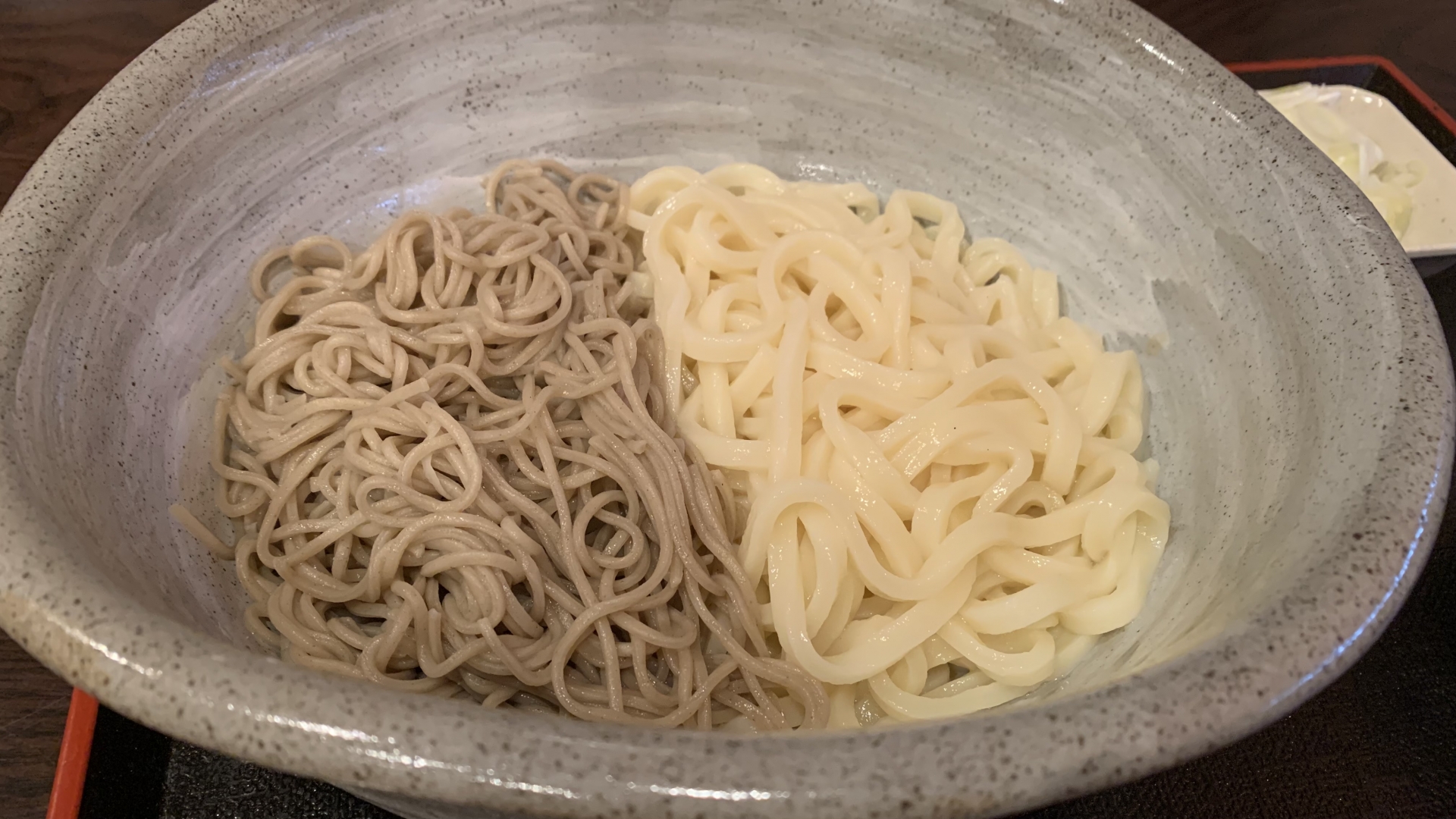
Walk around any Japanese city and you'll spot the words そば and うどん everywhere — on shop signs, hanging noren curtains, station kiosks. They look similar. They're both noodles. But which one should you actually walk into?
Here's Kaa-chan's guide to choosing the right bowl for right now.
Choose by How Hungry You Are — and What Texture You're After
Start here. What does your stomach actually want?
If you want something light and fragrant → Soba (そば)
Thin noodles made from buckwheat (蕎麦粉), with a grayish-brown color and a distinctly nutty, earthy aroma. They slide down cleanly and leave you feeling refreshed rather than stuffed.
If you want something filling and satisfying → Udon (うどん)
Thick, white noodles made from wheat flour. Chewy, substantial, and deeply comforting. The kind of bowl that makes everything feel okay. A true Japanese soul food.
One important note: soba contains buckwheat, which is a common allergen. If you have a buckwheat allergy, please be careful — and always check before ordering.
Kaa-chan's Tip: Can't Agree? No Problem
If you're with someone who wants soba while you want udon, there's an easy solution: find a traditional soba-ya (そば屋). Despite the name, most soba restaurants in Japan serve udon too — and often katsudon, tendon, curry rice, and other rice dishes as well. Think of it as a Japanese casual family restaurant that happens to specialize in noodles.
Growing up, Kaa-chan's neighborhood soba-ya was the go-to for delivery — simmered udon, katsudon, whatever the family felt like that day. That kind of all-purpose, welcoming soba shop still exists all over Japan. When in doubt, just find one and walk in.
Choose by Your Schedule
If You Need to Eat Fast → Station Soba (駅そば)
On train platforms and just outside ticket gates across Japan, you'll find tachigui soba (立ち食いそば) — standing noodle counters with few or no seats. This is the ultimate Japanese fast food: order, eat, done, gone.
Kaa-chan was a regular during the office years. 😄 The go-to order was always kakiage soba with extra green onion. These days, with prices up and one large kakiage feeling a bit heavy, the current favorite is kake soba with a small kakiage and scallions on the side. In fact, Kaa-chan had exactly that last week.
One local rule worth knowing: once you've finished, move on. Lingering and chatting at a tachigui counter isn't the done thing. Eat with purpose, then clear the space. That's the cool way to do it.
If You Want a Big Bowl for a Small Price → Self-Service Udon Chains
Chains like Marugame Seimen (丸亀製麺) serve Sanuki-style udon — firm, springy, made fresh daily — at prices that are genuinely hard to believe. Kaa-chan's family has been known to make an emergency trip on "I really don't feel like cooking tonight" evenings. It always hits the spot.
Hot or Cold?
Both soba and udon come in two temperature styles: kake (かけ) — hot noodles in warm broth — and mori or zaru (もり・ざる) — cold noodles served with a dipping sauce on the side. On a hot day, cold noodles are the obvious call. Kaa-chan will cover the full world of mori and zaru in the next article.
Choose by Where You Are in Japan
Japan's noodle culture shifts dramatically by region. Pay attention as you travel — it's one of the more quietly fascinating things about moving around the country.
Tokyo and Eastern Japan → Soba Country
Soba culture has deep roots in Tokyo, going back to the Edo period. The broth here is dark — built on koikuchi soy sauce with a bold hit of katsuobushi. Strong, savory, unmistakably Tokyo.
Kyoto, Osaka, and the Kansai Region → Udon Country
In Kansai, udon reigns. The broth is pale golden and delicate — light soy sauce, gentle dashi, all umami and no sharpness. It looks completely different from the Tokyo version.
The difference is real enough that even instant noodle brands like Donbei and Aka-i Kitsune produce separate East and West Japan versions with different broth recipes. Kaa-chan grew up loving the Aka-i Kitsune broth as a proper treat. 😄
If your trip takes you to both Tokyo and Kansai, photograph the broth in each place and compare. The color alone tells the whole story.
Kyushu (Fukuoka and Beyond) → Soft Udon Territory
In Kyushu, udon is softer than anywhere else in Japan — and locals love it that way. Soba exists, but it's udon that dominates.
On a family trip to Kyushu with Kaa-chan's husband's relatives, a nephew mentioned that his local udon chain quietly has soba on the menu too — and he deliberately orders it just to seem like a connoisseur. Everyone laughed. 😄 When you're in Kyushu, follow the locals and go for the soft, pillowy udon.
So — Which One Today?
A generous soba-ya lunch with katsudon on the side? Or a quick bowl at a station counter, standing shoulder to shoulder with the salaryman crowd?
Either way, the right bowl is out there. Go find it.
— Mogu Mogu Kaa-chan
A Japanese mom who still can't walk past a kake soba stand without stopping — even if she just ate.