What Is Dashi? The Invisible Secret Behind Every Japanese Dish
Some links in this article are affiliate links. If you purchase through them, Kaa-chan may earn a small commission — at no extra cost to you.
Some links in this article are affiliate links. If you purchase through them, Kaa-chan may earn a small commission — at no extra cost to you.
Maybe you've already tasted it — and found yourself thinking, what is that flavor?
What does Japanese food mean to you?
Maybe you've already tasted it — and found yourself thinking, "What is that flavor, exactly?"
Or maybe you've only seen photos and videos so far, and you're dreaming about trying it someday.
Here's the thing. Japanese cooking has a secret. One that's not very well known outside Japan. That secret is dashi. It's a clear liquid — almost invisible. But it's the foundation of every single flavor in Japanese food. Let me tell you about it.
So, What Exactly Is Dashi?
If dashi had to be described in one sentence: "the umami of ingredients, dissolved into water."
You soak kombu or katsuobushi in water, or simmer them briefly. The result looks almost clear. The color is subtle. The aroma is surprisingly gentle.
And yet — this is the heart of Japanese flavor.
Describing dashi as "delicious" is actually a little tricky. It's not salty. Not sweet. Not sour. But the moment it hits your tongue, something feels... complete. Satisfied, maybe? It's a gentle kind of taste.
That feeling — Japanese people have had a word for it for a very long time. Umami.
It's Not Stock. Here's the Difference.
"Oh, is this like chicken broth?"
Kaa-chan gets that question a lot. The answer is: not quite.
Chicken broth and beef stock are simmered low and slow — for hours. Fat, bone, vegetables — all their flavors meld together. The result is rich. Dark. Strong. It can stand on its own as the star of a dish.
Dashi is built on the opposite idea.
Just a few ingredients. Short cooking time. Nothing extra added. The goal isn't to layer flavors — it's to draw out only the umami.
The result is delicate. Clear. Almost silent. But a dish made with dashi and a dish made without it? They're completely different foods.
That, to Kaa-chan, is the most fascinating thing about dashi.
Umami: The Fifth Taste That Changed Everything
Here's something Kaa-chan looked up. Just a heads-up!
Sweet, sour, salty, bitter — for a long time, it was believed that taste had four basics.
Then, in 1908, apparently a professor at the University of Tokyo — Kikunae Ikeda — was studying kombu dashi. And he noticed something. This doesn't match any existing taste. This is a whole new category.
He named it umami.
From what Kaa-chan has read, it's now recognized worldwide — by scientists and chefs alike — as the fifth basic taste. Apparently it's found in all kinds of foods: cheese, ripe tomatoes, mushrooms. But something that draws out umami as purely as dashi does? That's rare, even globally.
And that's all from Kaa-chan's research corner! 😄
So when you taste dashi and think, "This is good... but what flavor is it?" — that's completely natural. That might just be your first real encounter with umami.
The Main Types of Dashi
Dashi isn't just one thing. Depending on the ingredients, there are several types.
Kaa-chan did a bit of research on this part too, so take it as a reference!
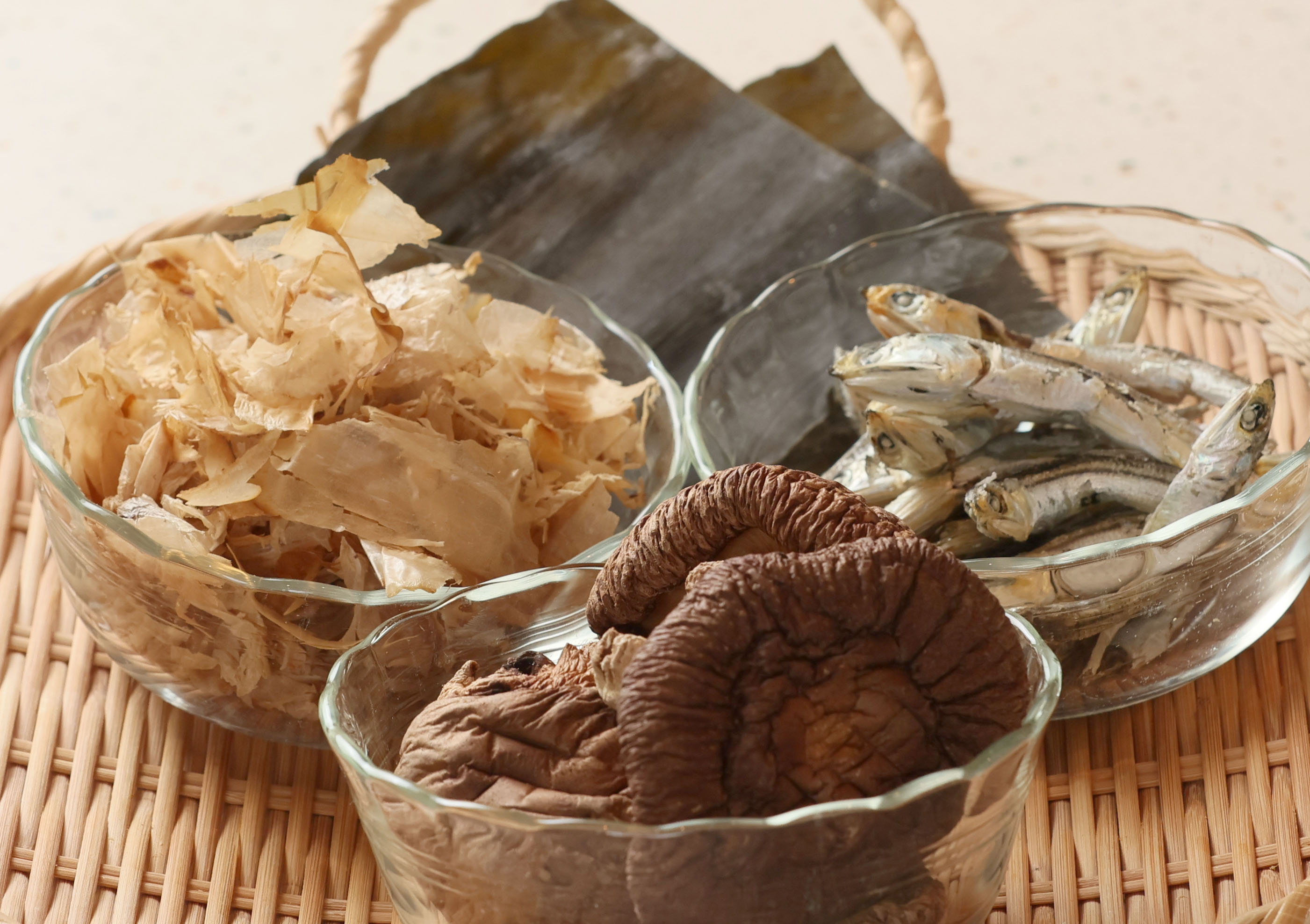
Kombu Dashi
Kombu — a large seaweed that grows in the cold waters off Hokkaido.
Just soak it in water, and you get a clear, gentle dashi. It's plant-based, so it works for vegetarian and vegan cooking too. Apparently it's rich in glutamate — one of the main umami compounds — and is often used as a base for other types of dashi.
Katsuobushi Dashi
Katsuobushi — skipjack tuna that's been steamed, smoked, and fermented, then shaved into thin flakes.
Apparently it's known as one of the hardest foods in the world. Add it to hot water, and in just a few minutes you get an amber-colored, fragrant dashi. From what Kaa-chan has read, it's rich in inosinate and has a bold, strong umami flavor.
Awase Dashi
Awase dashi uses both kombu and katsuobushi.
It's the most commonly used dashi in Japanese cooking. Apparently, when the two umami compounds — glutamate and inosinate — combine, the result is several times more flavorful than either one alone. They call this the "umami synergy effect." That's said to be why awase dashi is considered the foundation of Japanese cooking.
Iriko / Niboshi Dashi
Dashi made from small dried fish — mainly Japanese anchovies.
It has a slightly briny aroma and a deeper, bolder flavor. It's commonly used in western Japan, particularly in Kyushu and Shikoku. Pairs especially well with miso soup.
Shiitake Dashi
Dashi made by soaking dried shiitake mushrooms in water.
It's plant-based, with a distinctive deep aroma and rich umami. An essential part of shojin ryori — Japan's traditional Buddhist vegetarian cuisine. Combine it with kombu dashi and you get a layered, plant-based dashi with real depth.
Where You'll Find Dashi — Without Even Noticing
When you eat Japanese food, dashi is almost certainly somewhere in the dish.
Miso Soup — It looks like a miso soup. But what gives it that depth? Dashi. Without it, miso soup is just salty.
Udon and Soba Broth — That clear, golden broth. It's dashi combined with soy sauce and mirin. The recipe is simple — which means the quality of the dashi shows up directly in every sip.
Ramen Broth — Ramen originally came from China. But once it arrived in Japan, it merged with dashi culture and evolved into something uniquely Japanese. Tonkotsu, shoyu, shio, miso — every style uses dashi. The more popular the ramen shop, the more obsessive their approach to dashi. That "something is different about this bowl" feeling? It comes from that obsession.
Nimono (Simmered Dishes) — Root vegetables, tofu, simmered together. Without dashi, the flavor simply can't soak into the ingredients.
Cut into Japanese cuisine at any point, and you'll find dashi. That's just the kind of cooking system it is.
Want to Try Dashi at Home?
Did that make you think, "Making dashi from scratch sounds hard"?
Totally okay. Kaa-chan gets it. Honestly? Kaa-chan hasn't made proper dashi from scratch in years. Probably not since home ec class in school — that level of long ago. Kaa-chan just tosses the kombu into the pot and leaves it there (too much effort to fish it out). Carefully making dashi with katsuobushi? That's a distant memory.
But Kaa-chan still makes delicious meals every day! That's the real Japanese kitchen for you. Shortcuts are welcome here!
In Kaa-chan's opinion, granulated dashi or dashi packets are completely fine. Here are a few that Kaa-chan uses — or thinks are worth trying.
Granulated Dashi — Just dissolve in hot water. The easiest option for beginners.
👉Ajinomoto Hondashi on Amazon
Dashi Packets — Simmer like a tea bag. Brings out more of the natural ingredient flavor.
👉Kayanoya Original Dashi on Amazon
Dried Kombu — For those who want to try kombu dashi. Just soak in water. Available at Japanese grocery stores and Asian supermarkets worldwide.
— Mogu Mogu Kaa-chan
A Japanese mom who grew up eating dashi every single day — and still does.